


Most people talk about instant gratification like it is a modern character flaw. We blame phones, convenience culture, advertising, fast delivery, and social media. Those things absolutely shape how temptation shows up in daily life, but they are not where the impulse began. The desire for immediate rewards is much older than online shopping carts and same day shipping. In many ways, it is ancient survival logic still running inside a modern environment.
That is one reason people exploring bankruptcy debt relief are often dealing with more than debt alone. They may also be dealing with a brain that naturally leans toward relief now instead of stability later. A purchase, a short-term fix, or a financial shortcut can feel compelling not simply because someone lacks discipline, but because immediate reward speaks to a deep, old wiring in the human mind.
If you want to understand where the desire for instant gratification comes from, it helps to stop viewing it as laziness and start viewing it as adaptation. Human beings evolved in environments where waiting could be risky. Food spoiled, weather changed, threats appeared suddenly, and the future was not guaranteed. In that kind of world, taking the resource in front of you often made perfect sense. What once helped people survive can now create friction in a world built around abundance, credit, and constant access.
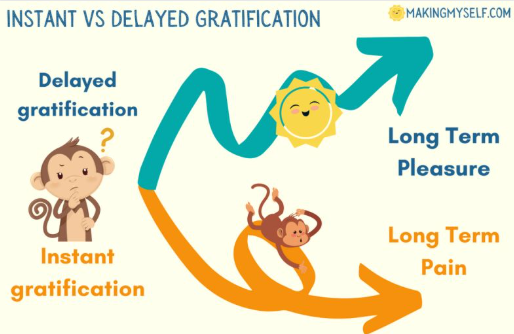
The Ancient Logic Behind Immediate Reward
Imagine living in a setting where resources are unpredictable. You do not know when the next successful hunt will happen. You do not know whether stored food will last. You do not know what danger might interrupt tomorrow’s plans. In that environment, choosing the reward available now is not irrational. It may be the safest move.
That ancient logic still echoes in the way people respond to reward today. The brain tends to value what is immediate because immediacy once carried survival value. A present reward is certain. A future reward is only a possibility. When the future is uncertain, the present becomes much more persuasive.
This does not mean every impulsive choice is driven by prehistoric instincts in a direct way. It does mean the human mind did not evolve in a world where patience was always rewarded. In many cases, delay was a gamble. That helps explain why immediate pleasure can feel so convincing even when we know, logically, that waiting would serve us better.
Scarcity Shaped the Brain for Quick Decisions
The modern world often encourages people to think of self-control as a simple matter of personal will. But scarcity changes how decisions feel. When resources are limited or unpredictable, the brain becomes more alert to immediate gain.
This is still visible today. When people feel financially insecure, emotionally drained, or uncertain about the future, short term rewards often become more attractive. That is not always because they are irresponsible. Sometimes it is because uncertainty makes delayed rewards feel less trustworthy.
Research on delay of gratification and self control helps show how powerful the tension is between immediate rewards and future goals. The issue is not just whether someone understands the long term benefit. It is whether the present feels more urgent, more real, and more believable than what comes later.
That is a very human problem, and it becomes even stronger in moments of stress or instability.
Modern Abundance Changed the Environment, Not the Wiring
The challenge today is not that people suddenly became more impulsive than past generations. The challenge is that the environment changed much faster than the brain did.
Our ancestors lived with scarcity and unpredictability. We live with constant availability. Food is everywhere. Entertainment is everywhere. Spending opportunities are everywhere. Credit can make rewards feel instantly reachable even when money is tight. The ancient impulse to grab what is available now is now surrounded by endless chances to act on it.
This is where the real tension comes in. A survival-oriented brain is operating in a marketplace designed to reward immediacy. Convenience is sold as a lifestyle. Waiting feels unnecessary. Friction is treated like a problem to eliminate. The result is that an old adaptive instinct can become a modern obstacle.
What once helped people respond quickly to uncertain conditions can now interfere with long term goals like saving, planning, debt reduction, or health.
Instant Gratification Feels Safe Because It Is Concrete
One reason immediate rewards are so powerful is that they feel certain. The snack is here. The purchase is available. The comfort is immediate. The relief is tangible. Future rewards, by contrast, often feel abstract.
This is especially true when long term benefits are slow to appear. Saving money does not always feel exciting in the moment. Eating healthier may not deliver instant emotional payoff. Paying off debt can take years. Building stability is meaningful, but it is rarely dramatic on a Tuesday afternoon.
That gap matters. The brain often responds more strongly to what is concrete than to what is conceptual. Immediate pleasure is vivid. Future benefit requires imagination, trust, and patience. In other words, long term thinking often asks the mind to choose something important that it cannot fully feel yet.
That is difficult, especially when the immediate option is right in front of you.
The Problem Is Not Desire Itself
It helps to be careful here. The desire for instant gratification is not proof that something is wrong with you. Wanting quick relief, comfort, or reward is normal. It becomes a problem when the pull of now repeatedly undermines what matters later.
That distinction is important because shame usually makes self regulation harder, not easier. If people view every impulse as evidence of weakness, they often end up stuck in a cycle of guilt and reaction. A more useful approach is to understand the impulse, then build systems that make long term choices easier.
The Stanford overview of the marshmallow studies and later self-control research helped popularize the idea that delayed gratification is not just about raw willpower. It is shaped by environment, trust, expectations, and learned strategies. That is a much more realistic way to think about the issue.
People are not just fighting temptation. They are navigating a mix of biology, environment, and habit.
Why Modern Life Makes the Impulse Stronger
If ancient scarcity planted the seed, modern life waters it constantly.
Digital systems are built around short reward loops. Notifications create anticipation. Shopping platforms reduce waiting. Entertainment is instant. Payment methods separate the feeling of spending from the feeling of losing cash. Even minor discomfort now has a quick fix available. Hungry? Order. Bored? Scroll. Stressed? Buy. Restless? Stream something.
None of these actions is automatically harmful, but together they reinforce a pattern. The mind gets used to relief arriving quickly. That can make slower forms of reward feel less appealing. Reading a long book, building savings, repairing credit, or improving health may all start to feel strangely unrewarding compared with faster alternatives.
This is not because those goals matter less. It is because they reward patience, and patience is harder to practice in an environment built to remove waiting.
Long Term Goals Require a Different Kind of Trust
At its core, resisting instant gratification often comes down to trust. Do you trust that the future reward is real enough to wait for? Do you trust that your effort now will matter later? Do you trust that discomfort in the present is not pointless?
That question matters more than people realize. In unstable conditions, immediate reward can feel smarter because it is guaranteed. In stable conditions, long term investment becomes more believable. This helps explain why some people struggle more with delay when life feels chaotic, insecure, or uncertain.
The issue is not just self control. It is whether the future feels reliable enough to sacrifice for.
Understanding the Origin Changes the Response
When you understand the origins of instant gratification, the conversation changes. Instead of asking, “Why am I so bad at delaying pleasure?” you begin asking, “What conditions make immediate reward feel so necessary right now?” That is a better question, because it opens the door to useful change.
You can create friction around impulsive choices. You can make long term goals more visible and immediate. You can reduce stress where possible, because stress often strengthens short term thinking. You can build routines that support patience instead of depending on perfect discipline.
Most importantly, you can stop treating the desire for instant gratification as a moral failure. It is a deeply human impulse shaped by ancient scarcity and modern abundance. It makes sense, even when it causes problems.
That understanding does not remove the challenge, but it does make the challenge easier to work with. The urge for immediate reward is old. The task now is learning how to live wisely with it in a world where almost everything can be had right away.
